How to Use Fake Instagram Posts for Marketing: A Guide for Businesses and Educators
Mockups let you test a campaign, brief a team and teach a class without publishing anything. Where they help, where they mislead, and the line you should not cross.
On this page
Every marketing team has had the same meeting. Someone describes a post, someone else pictures something different, and the thing gets approved on a shared misunderstanding. Then it goes live and the comments arrive.
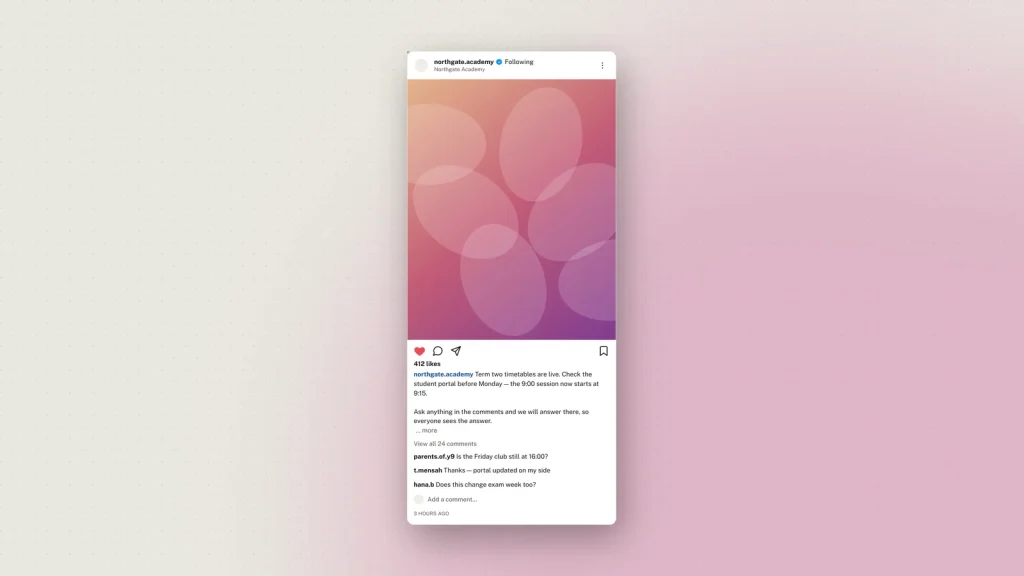
A mockup closes that gap for the price of a few minutes. It is not a creative exercise — it is a way of making sure the thing in your head and the thing in your colleague’s head are the same thing, before anybody commits.
This is about using Instagram post mockups honestly: where they earn their place, where they quietly mislead you, and the line that separates a marketing tool from a problem.
Where mockups genuinely help
Approving a post before it exists
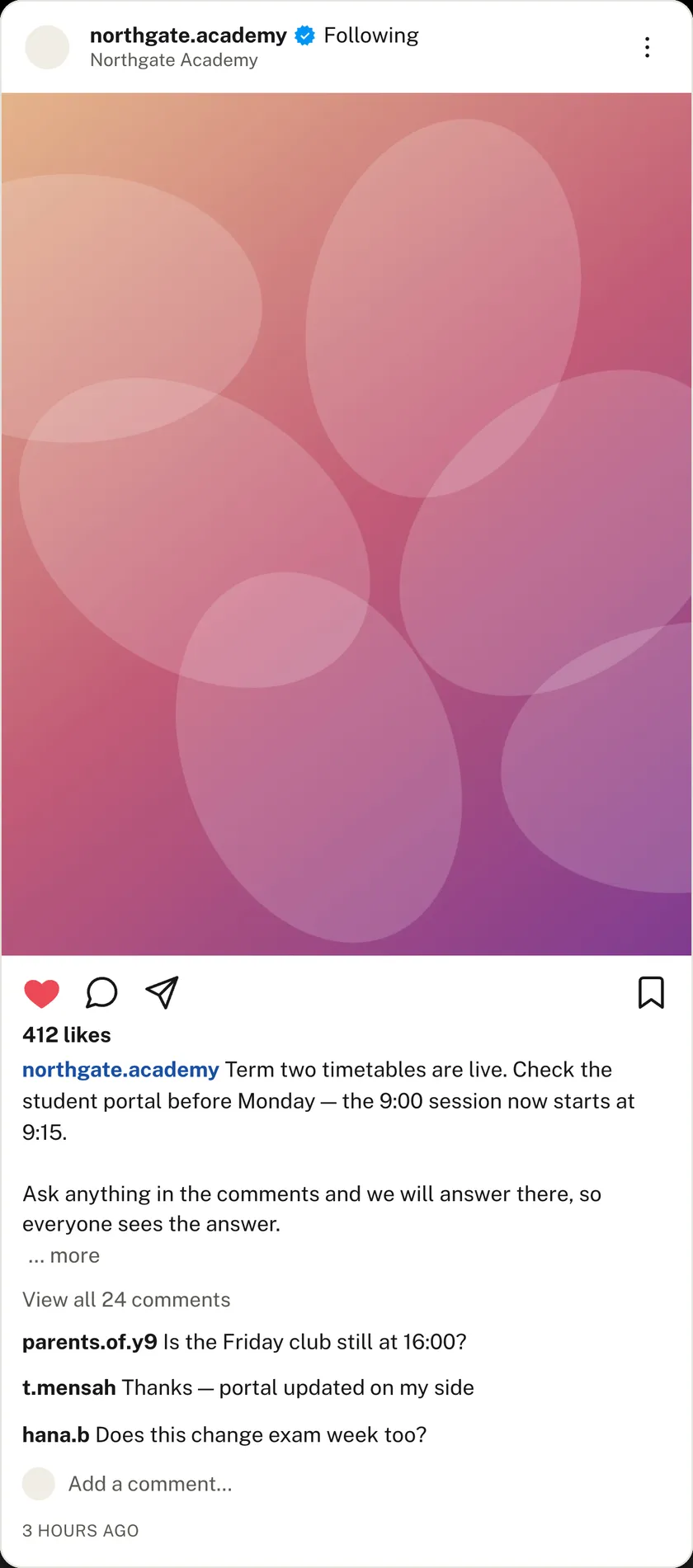
A caption in a document and a caption under a photo are different objects. Seeing it in place catches the line that runs too long, the hashtags that crowd the first line, the claim that reads fine in a brief and badly under a product shot.
Briefing people who are not in the room
A photographer, a freelancer, an agency. “Something like this, 4:5, caption under 100 characters” is a brief. A picture of it is an instruction.
Showing a client an idea without building it
Three proposed posts in a deck, with plausible engagement, costs twenty minutes. The same thing shot properly costs a day you have not been paid for yet.
Training new staff
A comment thread turning hostile, built deliberately, is a far better training exercise than waiting for a real one and hoping someone handles it well.
Teaching
For educators this is the main use, and it is the strongest one. A sponsored post with and without its paid-partnership label, side by side, teaches disclosure in about ten seconds. The same photo from a verified and an unverified account starts a better argument about trust than any amount of explaining.
Where they mislead you
This is the part most guides leave out.
A mockup cannot tell you whether something will work. You can give a post 140,000 likes in a text field. That number is a prop, not a prediction, and a deck full of invented engagement can quietly convince a room that a weak idea is a strong one. Use mockups to agree on what you are posting, not on how well it will do.
A perfect mockup flatters the plan. Real posts have awkward crops, captions written in a hurry and comments from people who did not read them. If every mockup in your deck is immaculate, you are planning for a feed that does not exist.
Mockups are not research. They are not a substitute for asking customers anything.
Making one that is actually useful
The details that decide whether a reviewer reacts to your idea rather than to the mockup:
- Use 4:5 portrait. It takes the most room in a real feed, which is why most accounts post it.
- Write the real first line. It is the only part most people see before the fold. If you are testing a caption, test that line.
- Keep likes and comments in proportion. Roughly one comment per fifty to a hundred likes. Equal numbers read as bought.
- Write comments like comments. Short, lowercase, slightly careless. Full sentences with correct punctuation are the giveaway.
- Leave the verified tick off unless the account you are mocking up actually has one.
- Export at 3× for a deck, 4× if it is going on paper.
The line
A mockup used internally, in a pitch, in a lesson or in a clearly-labelled example is ordinary professional work. A mockup presented to the public as a real post is something else, and depending on what it claims it may be deceptive advertising, defamation or fraud.
Three practical rules:
- Do not mock up another company’s account saying something it did not say. Even as a joke, even internally — decks leak.
- Do not use invented engagement as evidence. “Our last campaign got this” is a claim. A mockup is not one.
- Label it. Every legitimate use works just as well with the word “mockup” next to it.
Every image made here carries a hidden origin mark, so anybody can check an original file with the verification tool to see whether a picture came from Zeoob. That is deliberate: a tool that makes convincing mockups should also make them identifiable. Our responsible use page sets out the rest.
Common questions
Can I use mockups in a client pitch?
Yes, and it is one of the better uses. Say they are mockups in the deck.
Can I use them in paid advertising?
Not as a depiction of real engagement or a real endorsement. Most advertising regulators treat invented social proof as a misleading claim regardless of how it was made.
Can I mock up a competitor’s post?
Do not. Putting words in a named company’s mouth is the use most likely to end in a legal letter, and it breaks our terms.
Is it free?
Yes, with no sign-up, including HD downloads.
What about stories and DMs?
The story generator and the DM generator share the same editor, so a campaign’s post, its story and the conversation around it stay consistent.