Introduction
Why are some children naturally taller than others? Why do siblings from the same parents sometimes have different heights? Why does one child follow the family height pattern while another develops differently?
The answer begins with genetics and child height.
Genetics is one of the most important factors influencing how tall a child may become. The biological information inherited from parents helps determine growth potential, body structure, bone development, and many characteristics related to height.
However, genetics does not work alone. A child’s final adult height develops through a combination of inherited traits, growth patterns, health, nutrition, and environmental influences.
Many parents begin their journey by asking “How Tall Will My Child Be?” Understanding the role of genetics is the first step toward answering that question scientifically.
While the previous guide on How Tall Will My Child Be? Best Height Prediction Guide explains the overall concept of future height prediction, this article focuses specifically on the powerful role genetics plays in shaping a child’s growth journey.
Modern height prediction tools, like jushify’s Height Calculator, combine genetic information such as parental height with other important growth factors to provide an estimated adult height.
How Genetics and Child Height Are Connected
Genetics provides the biological foundation for height.
A child receives genetic information from both parents. These inherited traits influence several aspects of development, including:
- Bone growth patterns
- Body proportions
- Growth timing
- Physical structure
- Height potential
Scientists consider height a complex genetic trait because many different genes contribute to growth.
There is no single “height gene” that determines exactly how tall someone will become. Instead, thousands of genetic variations interact with each other to influence growth.
Understanding genetics and child height helps parents recognize why children from the same family can still follow different growth patterns.
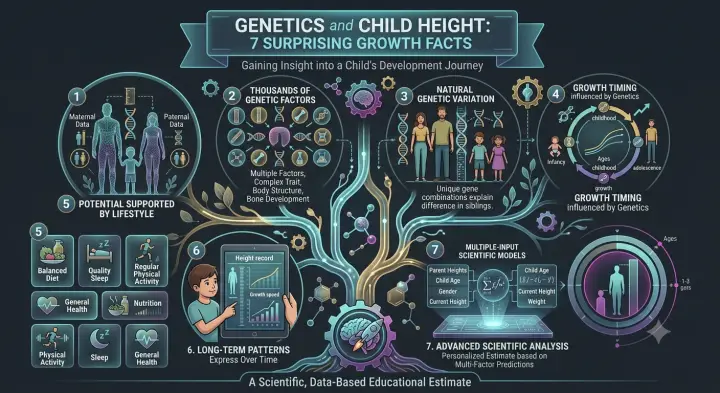
7 Surprising Ways Genetics Shapes Child Height
1. Parents Provide the Genetic Height Foundation
One of the strongest genetic influences on child height comes from parents.
A child inherits traits from both mother and father, creating a unique combination of genetic information.
Parents’ heights can provide important clues about a child’s potential because family height patterns often continue across generations.
For example:
- Tall parents often have taller children
- Shorter parents often have shorter children
- Average-height parents may have children with different outcomes
However, parental height is not a guarantee.
Genetics provides a foundation, but other factors influence how that potential develops.
This is why scientific height prediction methods do not rely only on parents’ height. They combine genetic information with other measurements.
2. Height Depends on Thousands of Genetic Factors
Many people think height comes from one simple inherited trait.
The reality is much more complex.
Human height is influenced by many genes that affect:
- Bone length
- Growth plate activity
- Hormone response
- Body structure
- Development speed
Each genetic factor contributes a small amount to overall growth.
Together, these factors create an individual growth pattern.
This explains why two children with similar family backgrounds may still grow differently.
Genetics creates possibilities, but development determines how those possibilities appear.
3. Siblings Can Have Different Heights Despite Similar Genetics
A common question parents ask is:
“Why are my children different heights when they have the same parents?”
The reason is genetic variation.
Although siblings receive DNA from the same parents, each child receives a different combination of genetic information.
One child may inherit more height-related traits from one side of the family, while another child may inherit different combinations.
This natural variation is completely normal.
Family genetics helps explain patterns, but it cannot predict every individual outcome without considering other factors.
4. Genetics Influences Growth Timing, Not Just Final Height
Genetics affects more than the final height a person reaches.
It also influences:
- When growth spurts happen
- How quickly children develop
- When puberty-related growth changes occur
Some children experience growth changes earlier, while others develop later.
These differences are often connected to inherited biological patterns.
This is why age and growth stage are important when analyzing future height.
The upcoming article “6 Critical Growth Stages That Shape Your Child’s Future Height” will explore how these development periods influence growth patterns.
5. Genetic Potential Can Be Supported or Limited by Lifestyle
Genetics provides a growth blueprint, but lifestyle factors influence how that potential develops.
Important supporting factors include:
Nutrition
A balanced diet provides nutrients needed for healthy development.
Sleep
Adequate sleep supports many biological processes involved in growth.
Physical Activity
Regular activity supports strong bones and overall health.
General Health
Long-term health conditions can influence development.
This means genetics and environment work together.
A child may inherit strong height potential, but healthy development requires proper support throughout childhood.
6. Growth Patterns Reveal How Genetics Expresses Over Time
A child’s growth journey provides clues about how genetic potential is developing.
Growth tracking helps parents observe:
- Height changes over time
- Development speed
- Consistency of growth
A single measurement cannot explain the complete picture.
Long-term growth patterns show how inherited traits interact with development.
This is why growth tracking is an important part of understanding child height.
7. Genetics Helps Modern Height Prediction Become More Personalized
Modern technology allows scientists to combine genetic information with other measurable factors.
A scientific height calculator does not simply ask:
“How tall are the parents?”
Instead, it analyzes multiple inputs together.
For example, the Jushify Height Calculator considers:
- Parental height
- Child’s age
- Gender
- Current height
- Weight
These factors are processed through a multi-factor prediction model using statistical analysis.
This approach provides a more personalized estimated adult height compared with basic calculations that use only one or two measurements.
Genetics vs Environment: Which Matters More for Height?
A common debate is whether height is determined by genetics or environment.
The answer is that both matter.
Genetics provides the foundation.
Environment influences how that potential develops.
A child’s growth can be affected by:
- Nutrition quality
- Sleep habits
- Health conditions
- Physical activity
- Overall development
Think of genetics as the growth potential a child inherits, while lifestyle factors influence how that potential is achieved.
Why Parent Height Is Included in Height Prediction Tools
Parent height is one of the most valuable inputs in child height prediction because it represents inherited growth characteristics.
When a height calculator asks for:
- Mother’s height
- Father’s height
it is using this information as part of the genetic baseline.
However, modern tools go beyond parental height.
A reliable prediction system also considers:
- Child’s current development
- Age
- Gender
- Physical measurements
This combination provides a broader understanding of future growth.
How Jushify Uses Genetics in Height Prediction
The Jushify Height Calculator is designed around a multi-factor approach.
By combining genetics and child height analysis with age, gender, current height, and weight data, Jushify creates a more complete growth prediction model.
The calculator uses statistical methods, including Linear Regression, to identify relationships between different variables.
Instead of depending on a single traditional formula, it combines multiple inputs to estimate future adult height.
The tool also provides visual growth analysis, helping users understand the result more clearly.
Why Genetics Alone Cannot Predict Exact Height
Although genetics plays a major role, predicting exact adult height is difficult because human growth involves many changing factors.
No calculator can know every future influence, including:
- Individual development differences
- Health changes
- Environmental factors
- Growth timing
Therefore, height prediction should always be viewed as an estimate based on scientific analysis.
The goal is understanding growth patterns, not creating a guaranteed future outcome.
How Genetics Connects With Height Calculator Accuracy
Parents often wonder:
“Does adding genetic information make height prediction better?”
Genetic information improves understanding because parental height provides important context.
However, accuracy depends on analyzing multiple factors together.
This is why advanced tools combine:
- Genetics
- Growth data
- Statistical methods
- Development information
The article “5 Powerful Facts About Height Prediction Accuracy Parents Should Know” will explain more about how scientific models evaluate prediction reliability.
Common Misunderstandings About Genetics and Height
Tall Parents Always Have Tall Children
Not always. Genetics influences height, but many factors affect development.
Short Parents Cannot Have Tall Children
Children can inherit different combinations of traits from both sides of the family.
Genetics Determines Everything
Genetics is important, but lifestyle and development also matter.
Height Can Be Predicted From One Factor
A single measurement cannot explain the complexity of human growth.
Frequently Asked Questions
How are genetics and child height connected?
Genetics and child height are closely connected because inherited traits influence growth potential, body structure, and development patterns.
Do parents’ heights determine a child’s final height?
Parents’ heights provide important genetic information, but they do not guarantee an exact adult height.
Why do siblings have different heights?
Siblings inherit different combinations of genes, creating unique growth patterns.
Can a height calculator use genetics to predict height?
Yes. Modern height calculators use parental height as one factor along with age, gender, current height, and weight.
Is genetics more important than nutrition for height?
Genetics provides height potential, while nutrition and health help support healthy development.
Final Thoughts
Genetics plays a fascinating role in shaping child height. It creates the biological foundation that influences growth potential, body structure, and development patterns.
However, height is not controlled by genetics alone. Growth is the result of a complex relationship between inherited traits and environmental factors.
Understanding genetics helps parents see why every child follows a unique growth journey.
By combining genetic information with modern statistical analysis, tools like the Jushify Height Calculator provide a more complete way to explore estimated adult height.
The next step in understanding growth is learning how different child growth stages influence development and why timing matters so much in height prediction.